This article has been translated from the original Japanese using DeepL. Please note that some nuances or technical terms regarding local history may differ from the original.
For the original Japanese version : Click here
For a more immersive experience: If you’d like to explore this history through a story, please read the [Novel version on note (Click here)].
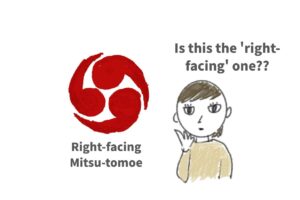
In my previous article, I recounted my journey from the landscapes of my childhood in the Kinki region, moving westward to Hiroshima and Kitakyushu, and finally settling in Buzen City on the eastern edge of Fukuoka Prefecture—where I encountered the “right-facing triple-tomoe crest,” which became the starting point for my quest to unravel historical mysteries.
In this article, I will explore the mysterious traces of history that seemed to be connected but ultimately remained disconnected, following the discovery of the right-facing tomoe crest.
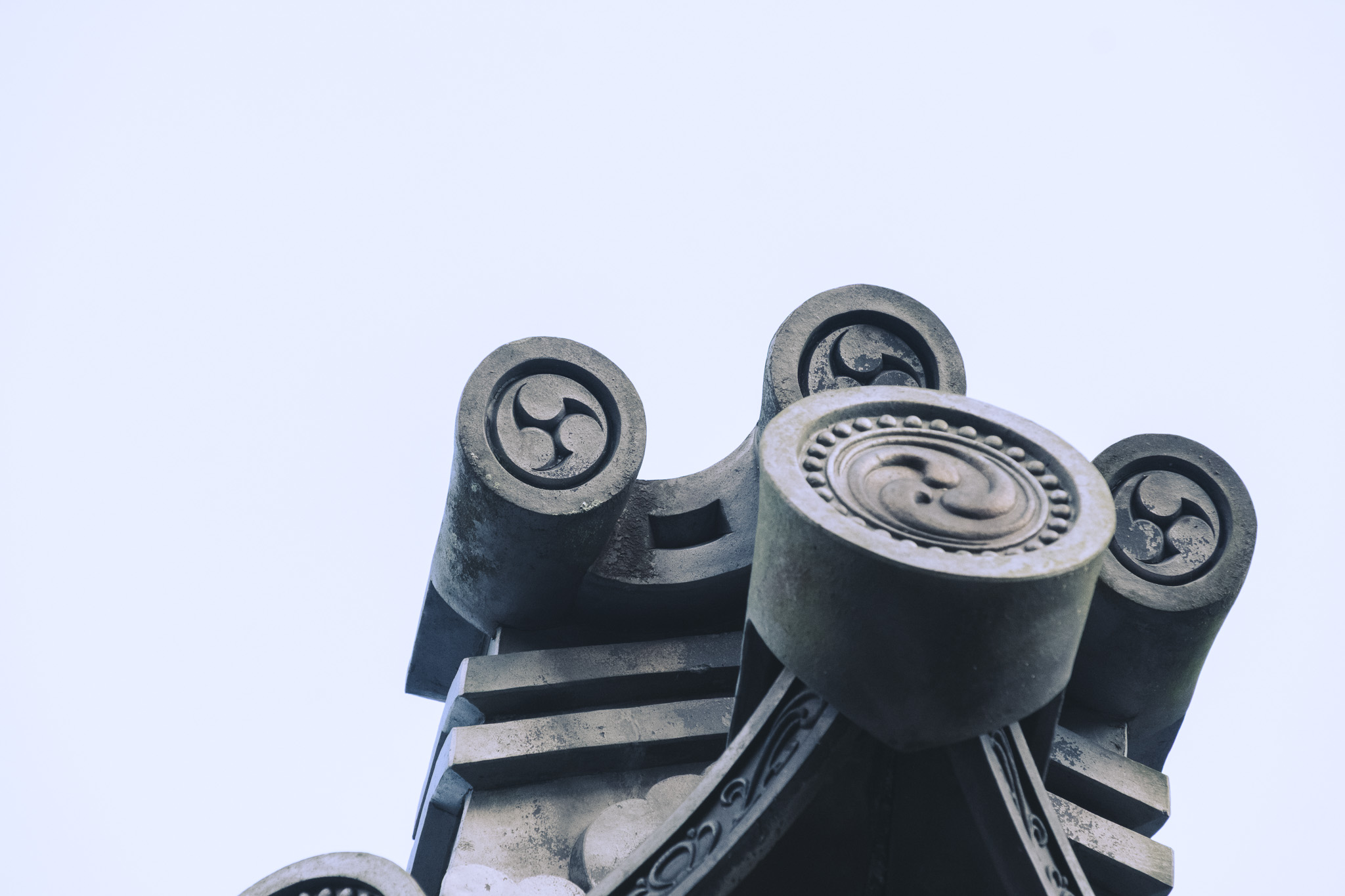
Is there any significance to the right-facing triple-tomoe crest, which is oriented in the opposite direction from Usa Jingu? I’m at a dead end with so few clues.
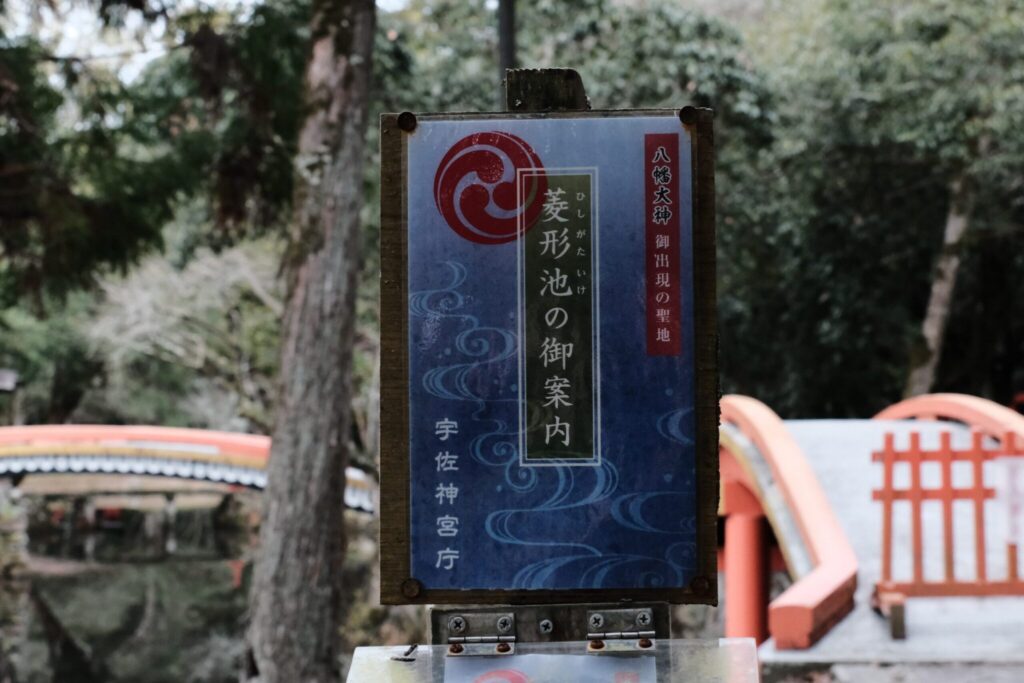
I began to wonder if there might be some significance to the fact that the “right-facing triple tomoe crest” displayed at the small “Imizaki Shrine”—located at the northern tip of the Kunisaki Peninsula, where the Rokugo Mansan temples, once closely associated with Usa Jingu, once flourished—and the enshrined deity of Hakusan Shrine, Kikuri-hime-no-mikoto, differed in orientation from the triple tomoe crest at Usa Jingu.
However, even after searching on Google and social media, I couldn’t find any definitive information.
Perhaps, like I once was, most people are unaware of the difference in the orientation of the triple-tomoe crest, as my keyword searches yielded almost no results.
So, I decided to start by investigating the connection to Usa Jingu and visited Bekku Hachiman Shrine, located near Imizaki Shrine.
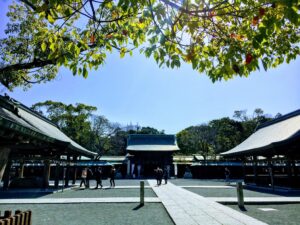
According to the official tourism website of Bungo-Takada City, Betsugu Hachiman Shrine is described as “one of the five branch shrines of Usa Jingu said to have been established on the Kunisaki Peninsula during the Yoro era (717–724), and it boasts the largest scale among the four surviving branch shrines.”
“It’s said that Betsugu Hachiman Shrine used to be a shrine located in the sea,” a woman who looked after the shrine told me.
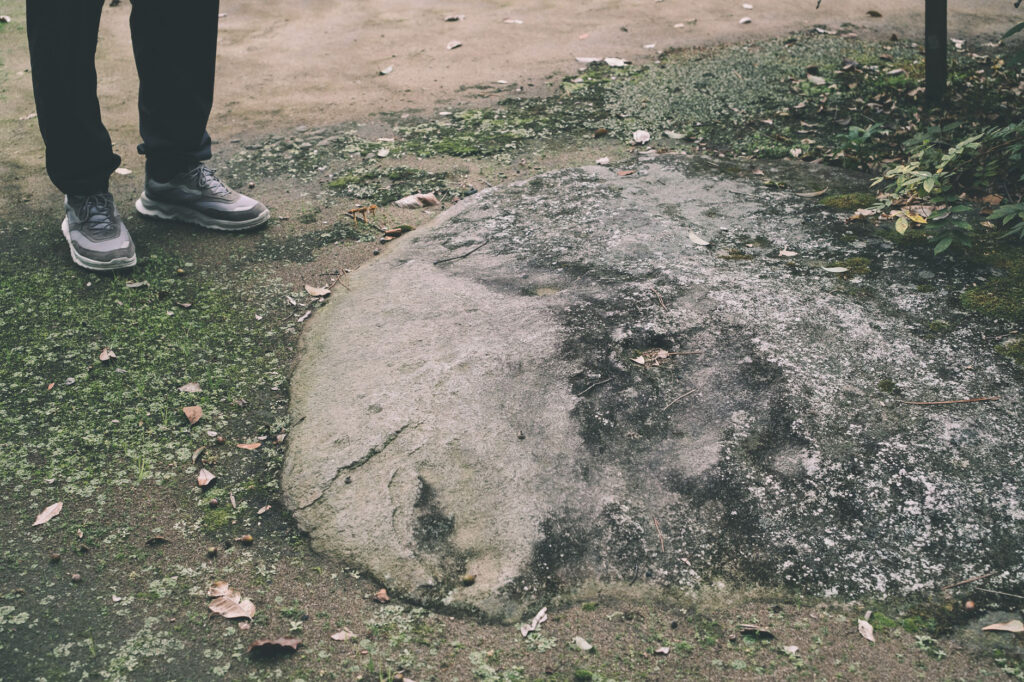
Inside the shrine, I saw the left-facing triple-tomoe crest, but on the pillars of the large gate—believed to have been built in the late Edo period—I found the right-facing triple-tomoe crest.
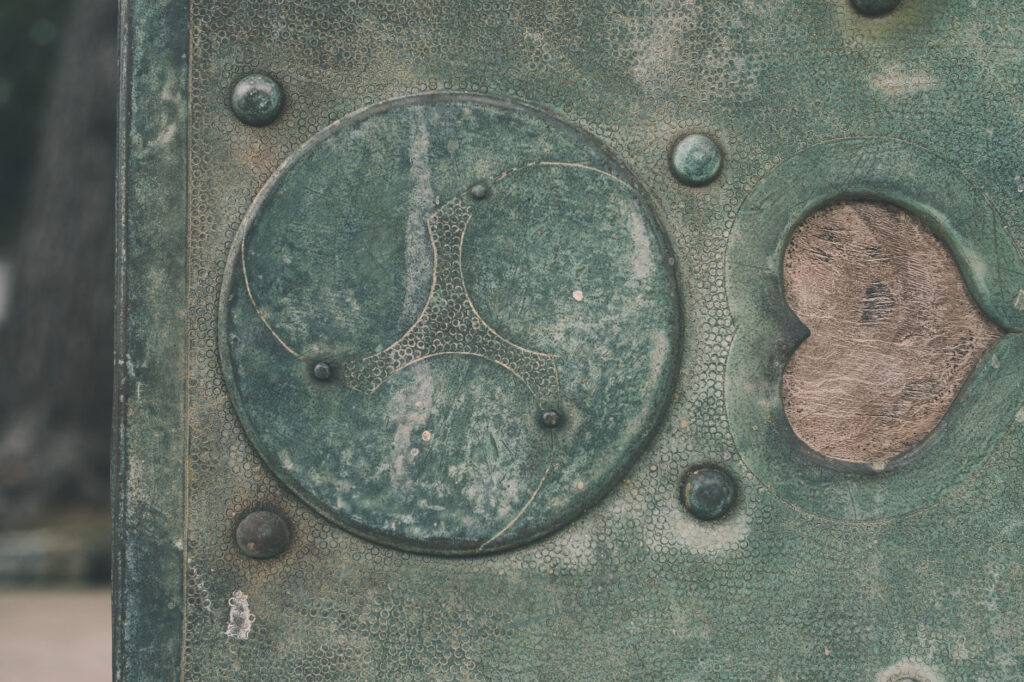
The gate from the Edo period bore the right-facing triple-tomoe crest—yet within the shrine grounds, there were also structures bearing the left-facing triple-tomoe crest.
Later, when I visited other historic sites, I found similar instances where the left and right versions were mixed.
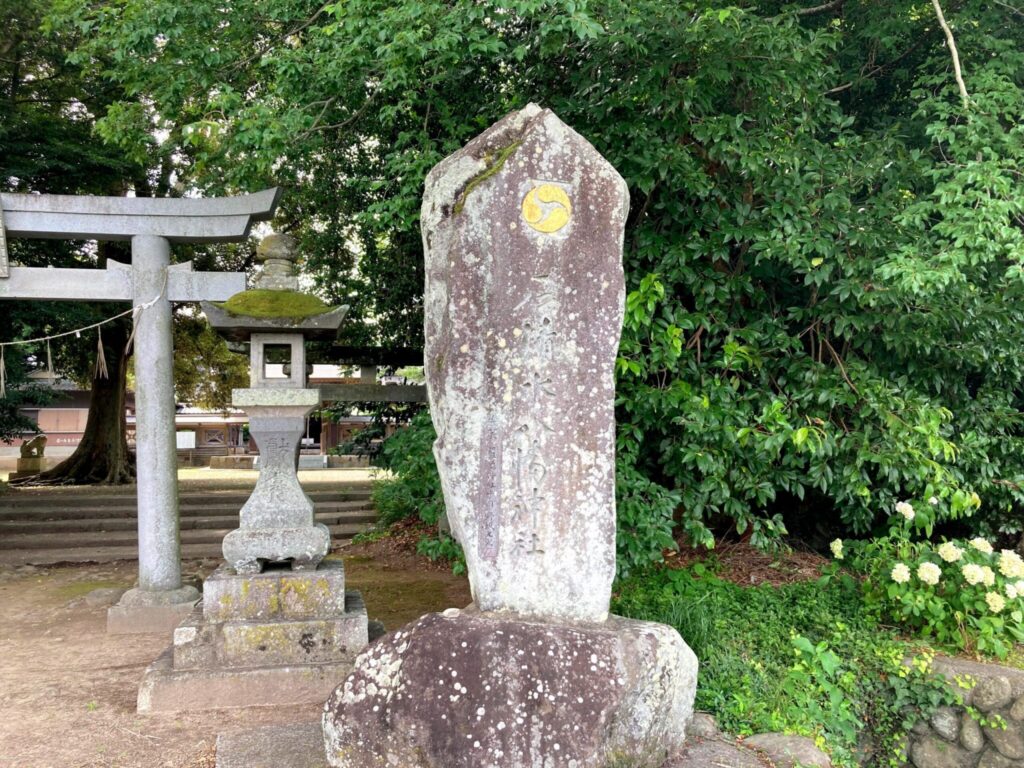
Other than that, I painstakingly checked photos of each shrine on Google Maps and similar services.
My gut feeling at the time was that there seemed to be a lot of shrines with the right-facing triple-tomoe crest west of Fukuoka City.
However, I had absolutely no idea why.
There was also information suggesting that many shrines in the Chikugo River area of Fukuoka Prefecture—specifically those belonging to the “Shō Hachiman-gū” group—used the right-facing triple-tomoe crest, but the details remained unclear.
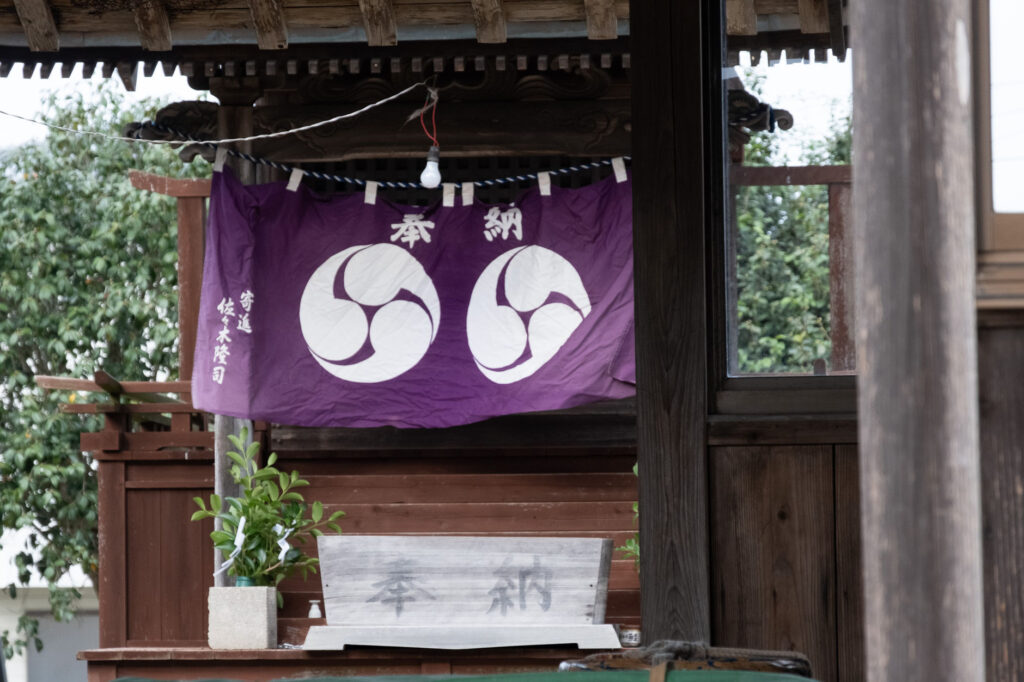
Also, because I was keeping an eye out for the right-facing triple-tomoe crest, I occasionally happened to spot one by chance.
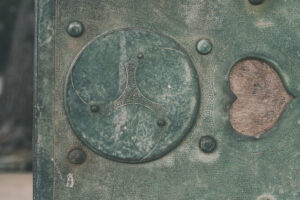
This image of the right-facing triple-tomoe crest shows a curtain displayed only during festivals at Kifune Shrine (Shimoshō) in Usa City, where I went to watch a Kagura performance.
I found myself in a dilemma: perhaps the right-facing triple-tomoe crest really does hold some significance, and there might be more of them out there if I looked, but I didn’t have enough time to search for each one individually.
Even historians and experts have said, “Well, I’ve never even thought about that,” or “Did the craftsman make a mistake?”
When I asked historians and other experts about the right-facing triple-tomoe crest, several of them replied, “Hmm, I’ve never really thought about it,” or “If there are right and left versions, maybe the craftsman just made a mistake?”
To historians, the difference between right and left might have been within the normal margin of error.
But to me, a former programmer, the question of “why they’re different” was a significant deviation—an outlier.
I kept investigating on my own, thinking, “Isn’t this a significant difference?”
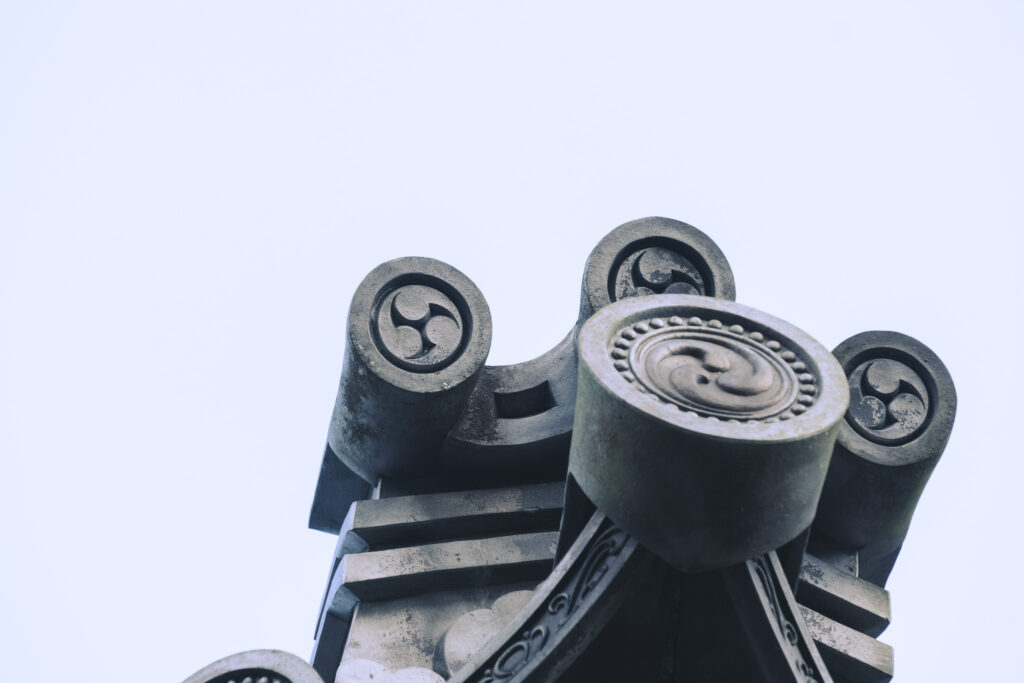
I found several historical sites that featured both the right and left versions, and even when I tried to search for shrines with the right-facing triple-tomoe crest, there were few articles written about them, and I couldn’t find many posts on social media either.
Even when I tried to check user-uploaded photos of each shrine on Google Maps, I couldn’t make much progress.
According to someone who is very familiar with shrines in Ehime Prefecture, Shikoku: “The orientation of the triple-tomoe crest on the right has a specific meaning.”
One day, I received a valuable tip from someone who had read the article titled “The Mystery of the Triple Right-Facing Tomoe” published on this website.
It came from a person who was very familiar with an old shrine family in the town of Himi, located in Ehime Prefecture on Shikoku.
One of the shrines enshrined by that family is Iwaoka Shrine.
When I checked the official website of Iwaoka Shrine, I found a remarkable account of its history.
It states that the shrine was “established in the first year of the Jōgan era (859 AD) under Emperor Seiwa, through a transfer of the deity from Usa.”
Furthermore, the emblem of this Iwaoka Shrine was indeed the “Right-Facing Triple Tomoe.”
According to the informant, there was a strong tradition passed down through the generations within that shrine family that “the orientation of the Tomoe crest must never be changed.”
Could there be a clan that, despite having enshrined the deity from Usa, stubbornly adheres to the “right” orientation—the opposite of the current Usa Jingu?
Does this suggest that there was once a time when Usa Jingu itself displayed the “Right Triple Tomoe” crest…?
Furthermore, I was told about another shrine maintained by that shrine family: Takao Shrine.
Although it bears that name today, prior to the Meiji era, it was known as “Gozutenno Shrine.”
Furthermore, both of these shrines are situated atop the “Central Structural Line,” a massive geological fault.
Why Gozutenno? Why the Central Structural Line?
From the “right-facing triple tomoe crest” I had been pursuing, even more mysteries began to emerge.
“I realized that nature and history had always been right there, all along—I just hadn’t known it.”
Pursuing another mystery that arose while investigating the mystery of the tomoe crest
“Gozu Tenno,” “Takao Shrine,” “the right-facing triple-tomoe crest,” “the Median Tectonic Line,” and the origins of the shrine family that were shared with me at the time would all come together later on.
While reviewing previous information to write this article, I realized that a mysterious keyword that had emerged from a reader’s tip at that time was actually connected to what came later.
But at that point, I still couldn’t see the connection.
I never would have imagined that everything was connected right here.
After this, I would go on to investigate “Gozu Tenno” and “Takao Shrine” in even greater detail.