This article has been translated from the original Japanese using DeepL. Please note that some nuances or technical terms regarding local history may differ from the original.
For the original Japanese version : Click here
For a more immersive experience: If you’d like to explore this history through a story, please read the [Novel version on note (Click here)].
As I explore the mysteries of Japanese history and shrines, there is one place that particularly captivates me.
In this post, I’d like to share the connections I’ve discovered between various “dots” regarding Betsugu Hachiman Shrine in Kagachi, Bungotakada City—a place I’ve long wanted to visit.
On Google Maps, this shrine is listed as “Betsugu Hachiman-gu.”
In fact, it is a place of great historical significance, said to have been established long ago during the Yōrō era (717–724), which falls within the Nara period.
It is the first shrine to have been built as a branch of Usa Jingu, and it is surprising to learn that it boasts the largest scale among the five surviving branch shrines.
It is said to have been established on the Kunisaki Peninsula during the Yōrō era (717–724) as one of the five branch shrines of Usa Jingu, and it boasts the largest scale of the four surviving branch shrines.
The rice-planting festival known as “Onbare,” held every year on July 29 and 30, is said to be a famous event.
Quoted from the official tourism website of Bungotakada City
As I was setting the GPS, I suddenly realized that it was right near Nagasaki-hama, a place I’ve visited countless times before.
The Mystery of the “Right-Facing Triple Tomoe Crest” Carved on the “Romon,” a Symbol of Shinto Shrines
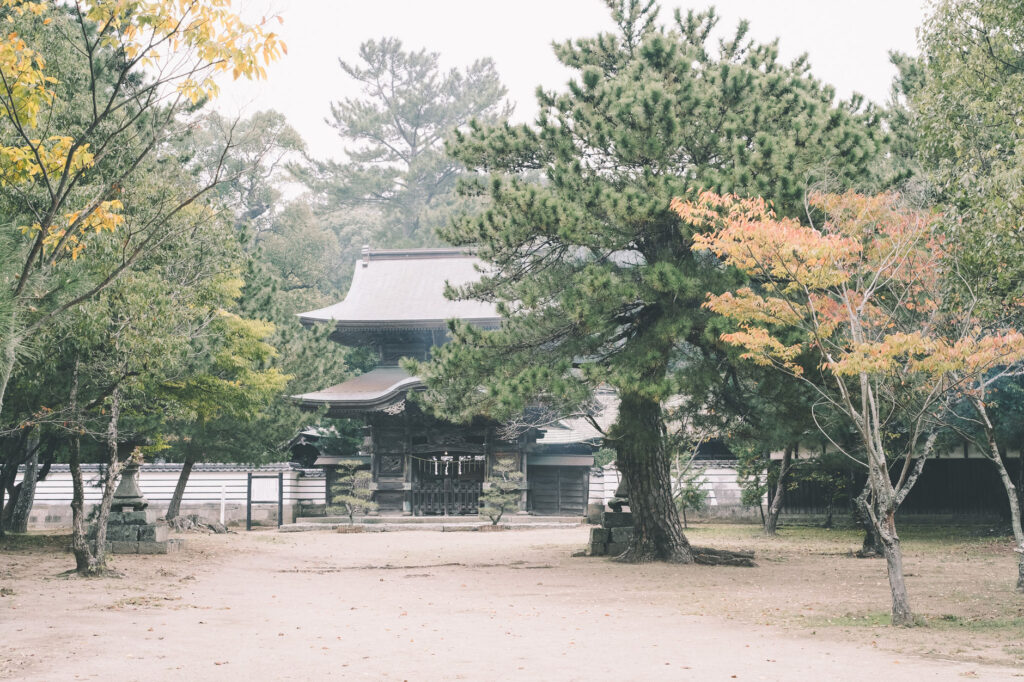
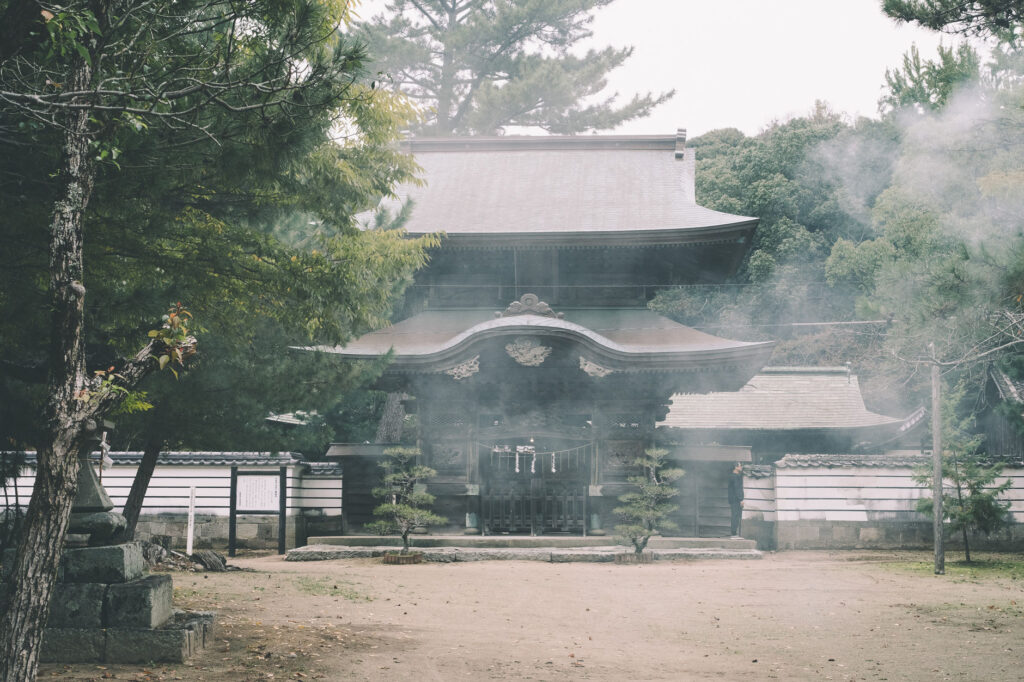
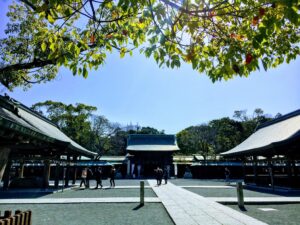
This Betsugu Hachiman Shrine has an impressive gate tower that is so large it’s overwhelming even when viewed from quite a distance.
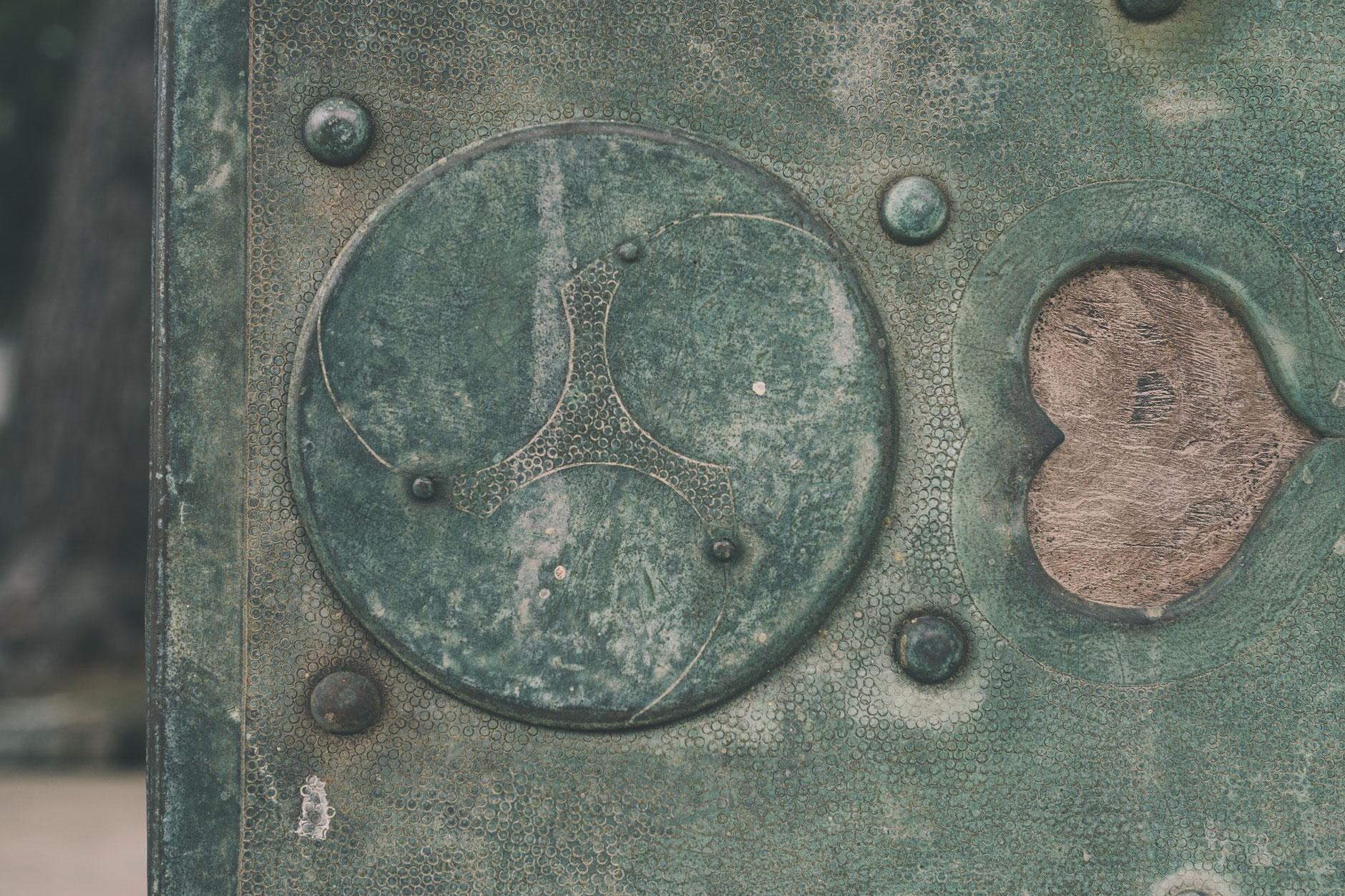
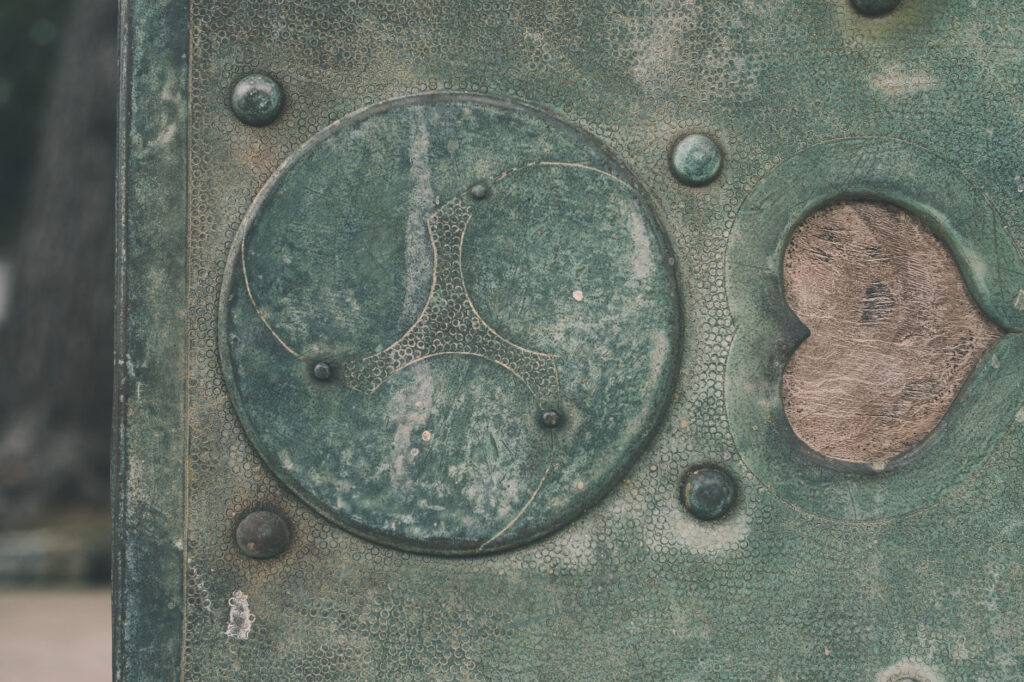
As I approached the gate tower, I spotted a certain crest and couldn’t help but gasp.
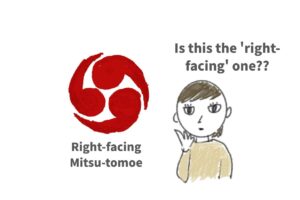
It was the “Right-Facing Triple Tomoe Crest.”
While the Left Triple Tomoe Crest was more commonly seen elsewhere on the shrine grounds, the metal fittings on the gate—which could be considered a defining feature of this shrine—were adorned with the Right Triple Tomoe Crest.
“It Used to Be the Sea”: What the Shrine’s Legend Reveals
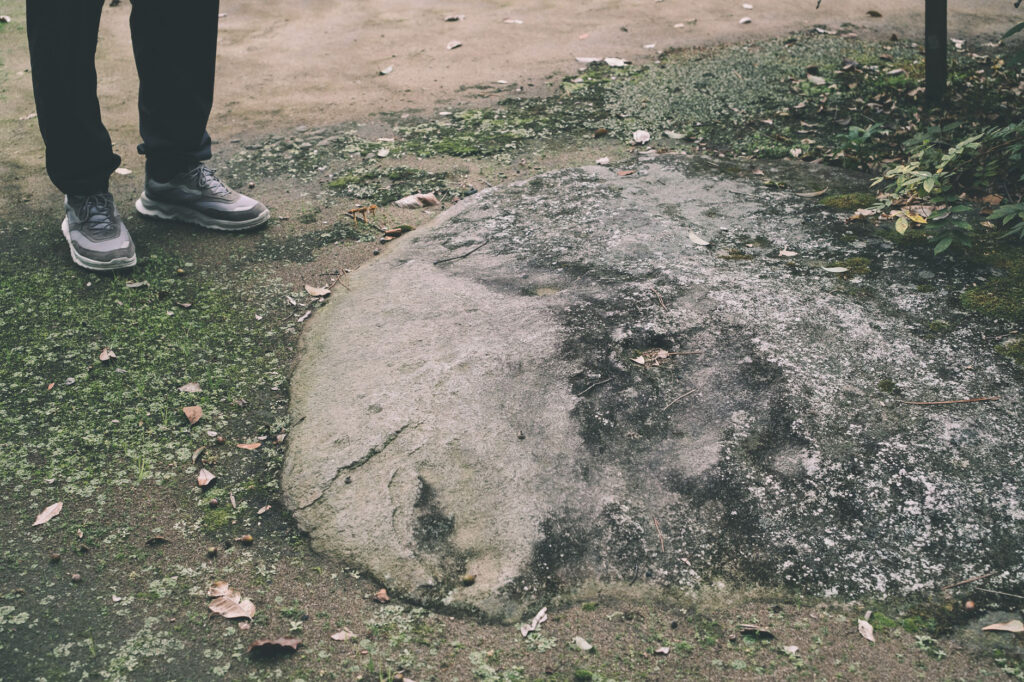
While I was visiting the shrine, I had the opportunity to speak with a woman who has been taking care of it for many years.
To my surprise, she told me that the site where this Betsugu Hachiman Shrine stands used to be the ocean.
Apparently, most of the rocks that now look like stone walls were once above ground, but because the area was once underwater, the soil was soft and gradually sank over time, resulting in the landscape we see today. She explained that these rocks are a remnant of the area’s past as the ocean.
What is the significance of its construction during a turbulent period in the history of Usa Jingu?
The Yoro era (717–724), during which the Betsugu Hachiman Shrine was founded, coincided with a period of great upheaval and immense significance for Usa Jingu.
According to the chronology on Usa Jingu’s official website:
716 (Reiki 2): Following an oracle, the shrine was relocated to the Oyamada site (present-day Oyamada Shrine).
720 (Yoro 4): The Hayato people of Osumi and Hyuga rebelled. Prayers were offered at Usa Jingu for the suppression of the rebellion. Later, the Hojo-e (Release of Living Creatures) ceremony was established.
725 (Jingui 2): Following an oracle, the main hall (Ichino-goten) was constructed on Mt. Ogura, and Miroku Zen-in was established in the Hitoashi area.
It was also during this period that the Hayato rebellion in Osumi and Hyuga occurred, which served as the catalyst for the start of the “Hojo-e,” Usa Jingu’s most significant festival.
Furthermore, just before the Yōrō era, there was the significant event of the shrine being relocated to the Oyamada area pursuant to a divine revelation.
This was indeed a crucial period during which Usa Jingu solidified its foundations and developed into a center of national faith.
What, then, was the significance of deliberately building Usa Jingu’s first branch shrine on the Kunisaki Peninsula during such a time?
In Conclusion
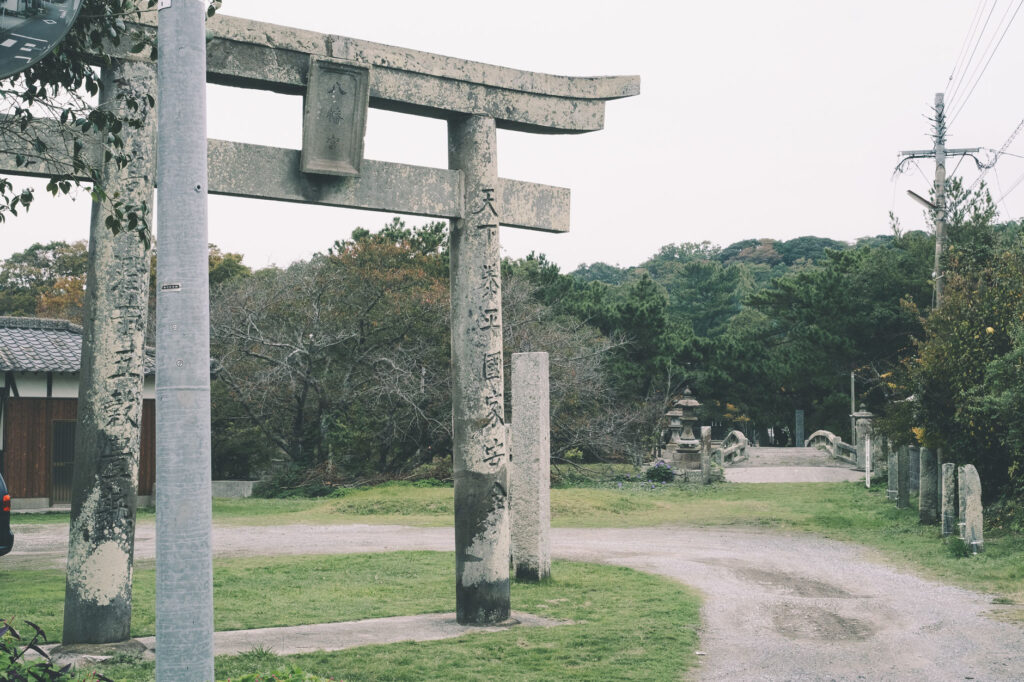
I find it a real shame that such crucial details aren’t covered in depth on general tourism websites.
If “Betsugu Hachiman Shrine is one of the five branch shrines of Usa Jingu,” then where are the other four?
Specific locations are often not listed, and I always think it would be so much more interesting if we knew them…
I haven’t found many shrines with the right-facing triple-tomoe crest yet, but from my fieldwork so far, it seems that many of the shrines bearing this crest are located in places connected to the “sea.”
The legend that this Betsugu Hachiman Shrine “was once the sea” might also serve as a clue supporting that hypothesis.
I find great joy in unraveling, one by one, the connections between the information I gather on-site and the history hidden within it.
Of course, there are still many things I don’t understand, but I plan to continue researching on my own and updating this site whenever I make new discoveries.
What we don’t know remains unseen.
However, if we revisit the places we’ve already visited with a fresh perspective, perhaps things that were once invisible will gradually come into view.
Location of Betsugu Hachiman Shrine
Kakaji, Bungotakada, Oita 872-1202