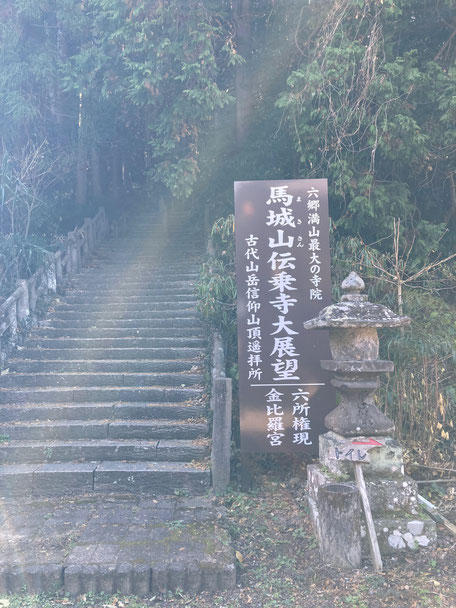
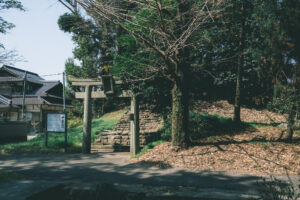
豊後高田市の真木大堂に行くと、本堂の裏側から階段の入口があります。

看板には「六郷満山最大の寺院 馬城山(まきさん)伝乗寺 大展望 古代山岳信仰山頂遥拝所 六所権現 金比羅宮」と書かれています。
六郷満山中、最も大きな寺だったと伝わる馬城山伝乗寺。


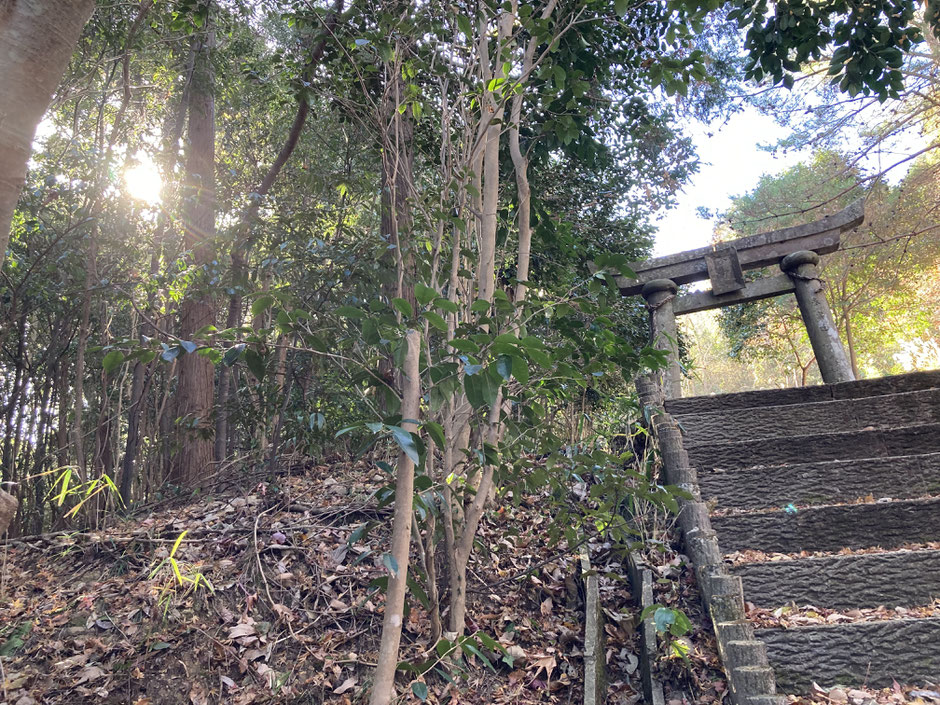
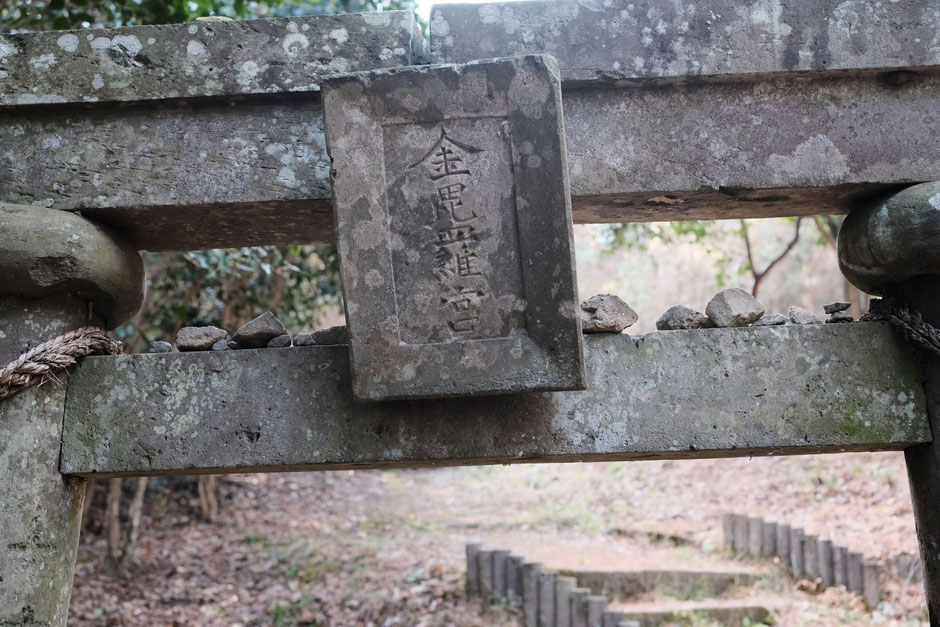
階段をのぼっていくと、「金毘羅宮」と刻まれた小さな鳥居があります。

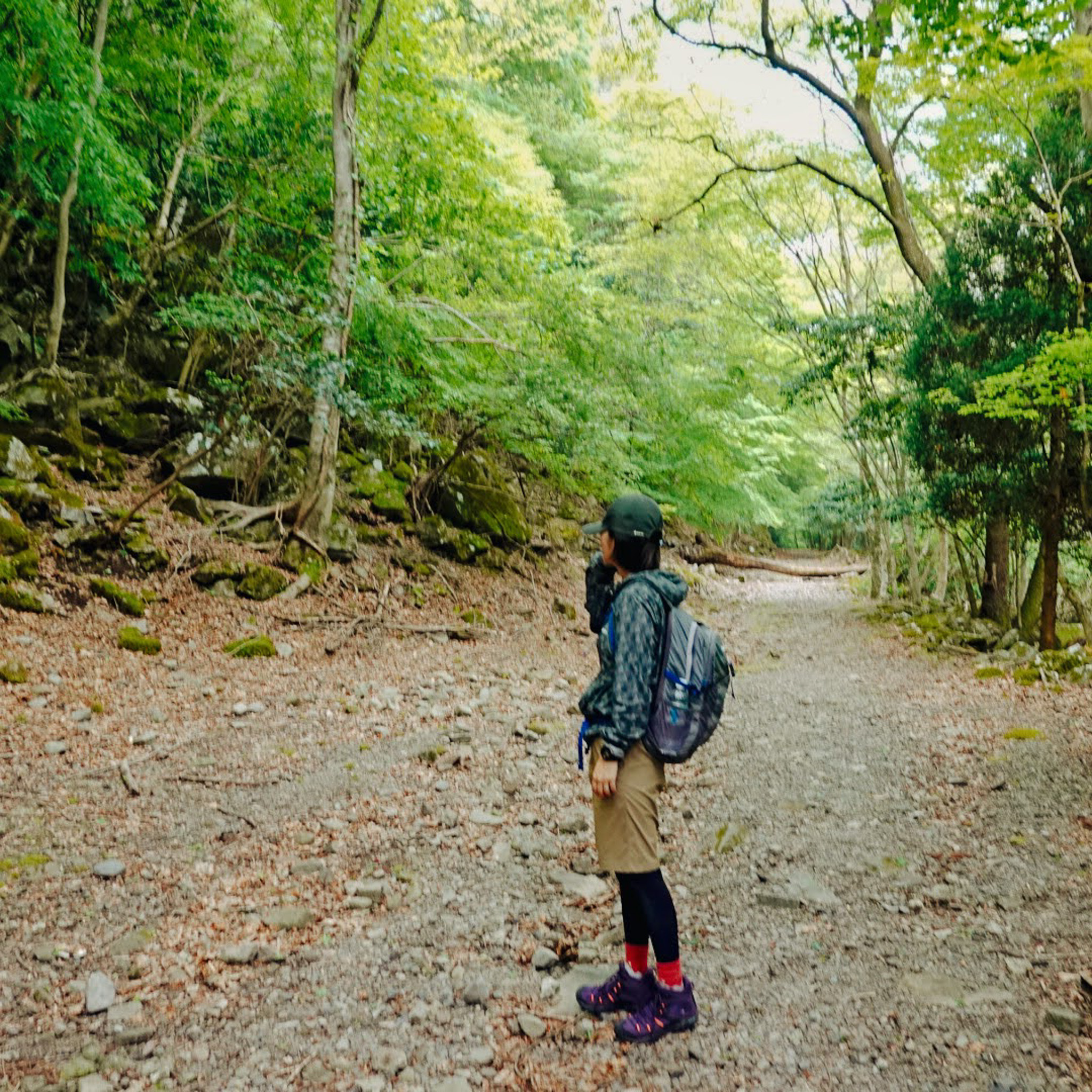
階段から20分程度歩くと山頂に着きます。
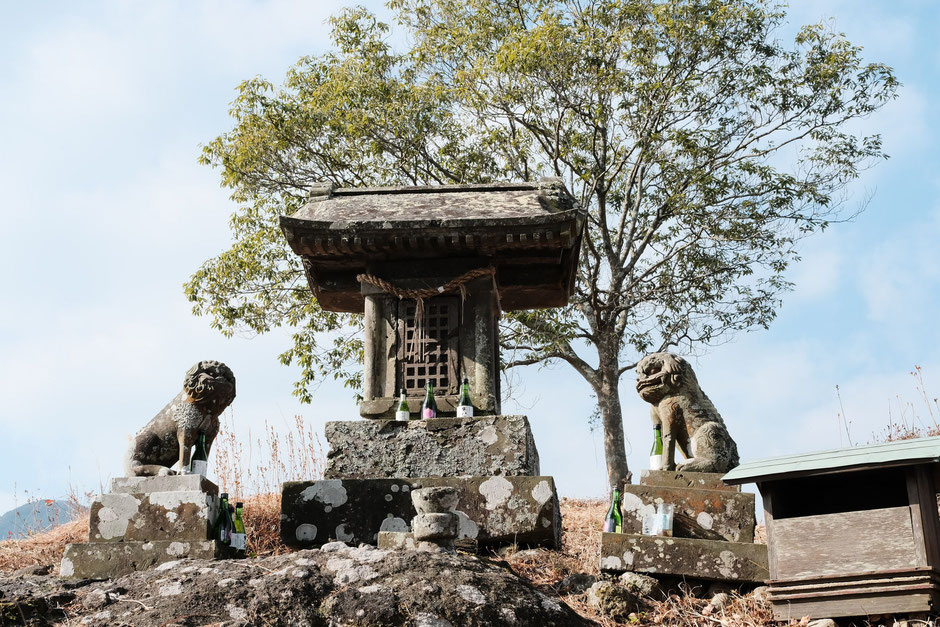
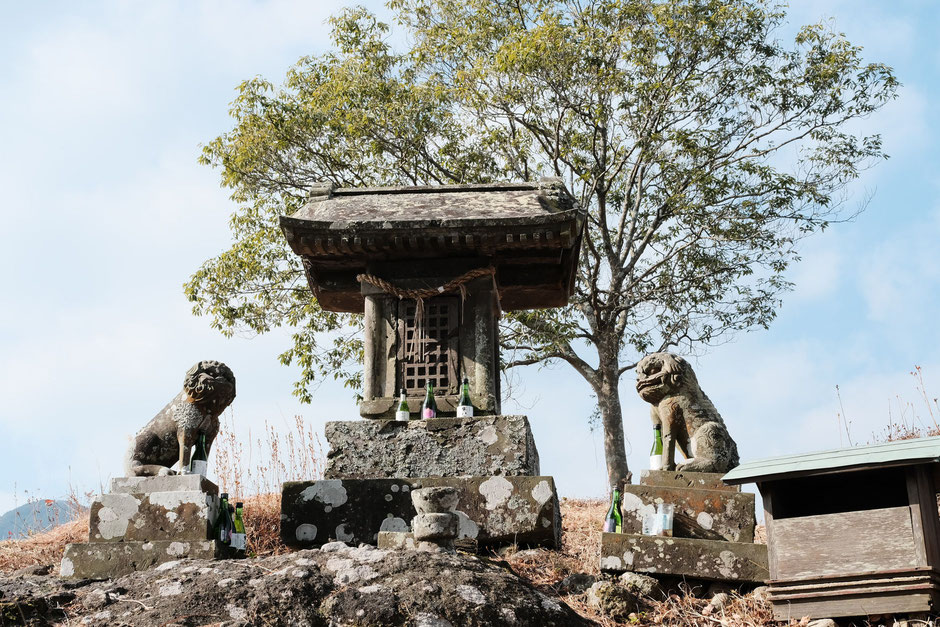
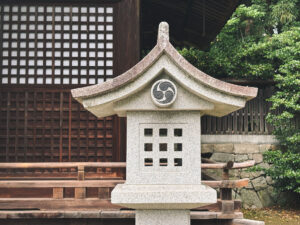
こちらが金毘羅宮です。
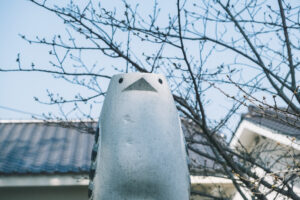
個性的でかわいい面立ちの狛犬さんが守る石祠が向かう方角には(西)

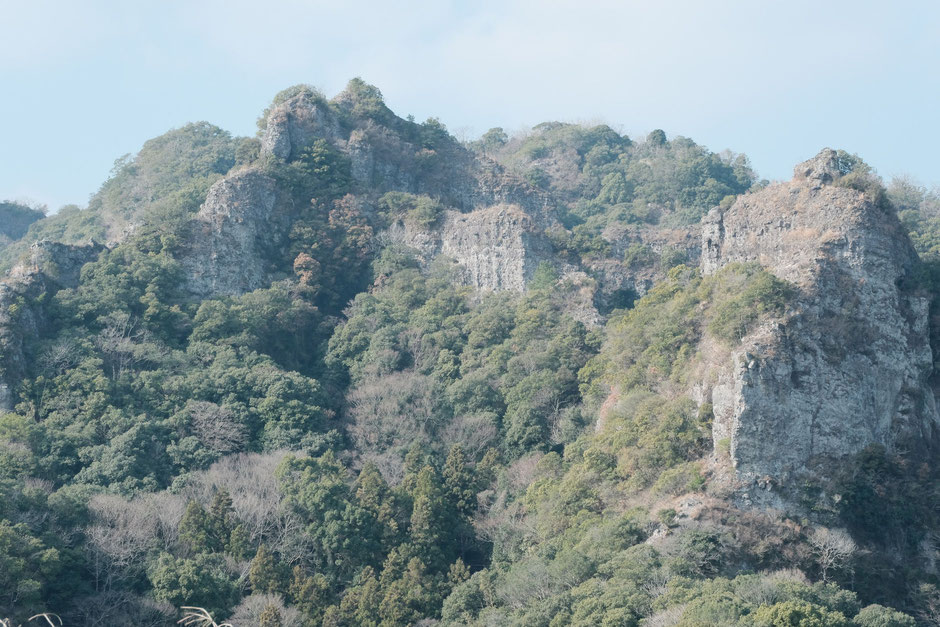
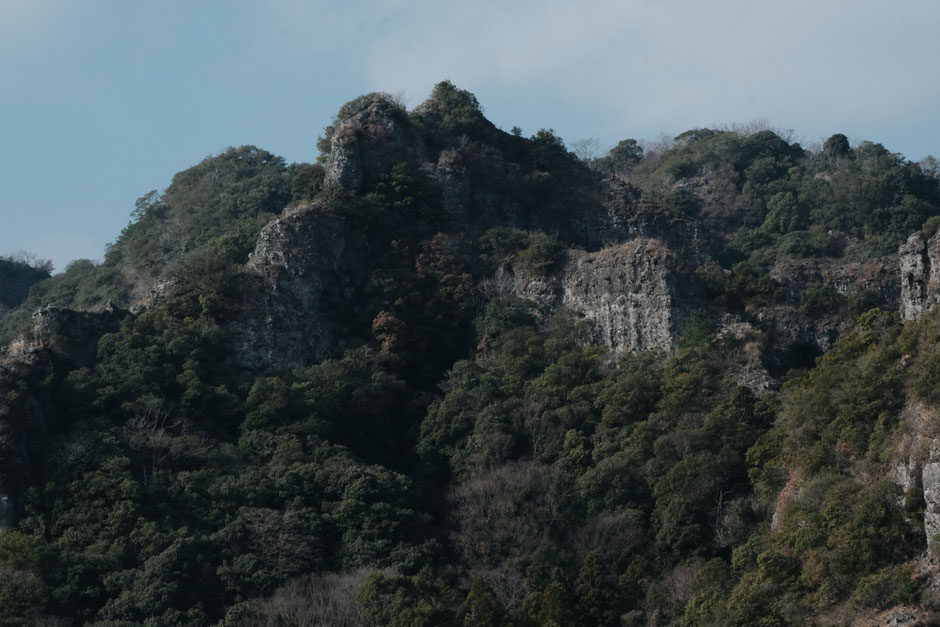
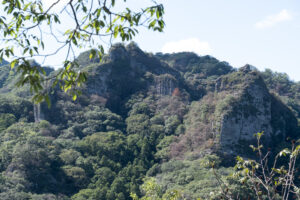
驚くほど存在感がある山があります。


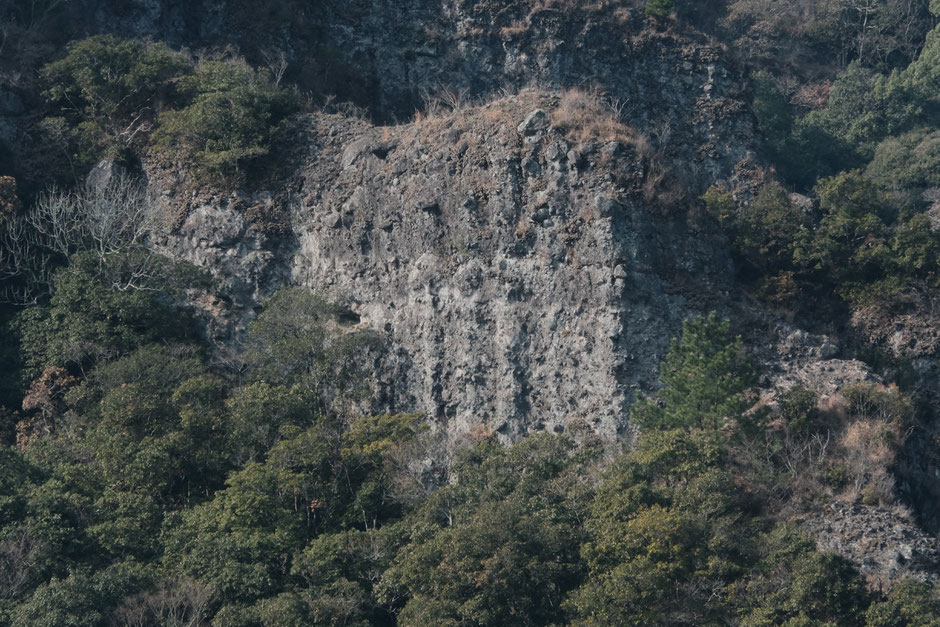
持っているなかで一番遠くが写せる望遠レンズで撮影しましたが、自然にできたものなのか、何か刻まれているのか。ちょっと分からないです。

GoogleMapにも載っていなかったこの山の名前は、こちらの記事で書きましたが、ZINEの内容確認にご協力いただいた、豊後高田市の文化財室所属のMさんから伺うことができました。
「喜久山」と書いて「きくやま」、かつては「菊山」と呼ばれていたそうです。
もしも私と同じくあの山の名前が気になっていた方がいらっしゃったら、お伝えできて幸いです。
名前が分かってスッキリ!と思いましたが、山の写真を久しぶりに見て、あの崖には何も刻まれていないか伺いたくなりました。
また機会があれば伺ってこちらでも紹介したいと思います。
この記事に近い記録

English Summary
An English summary has been added below to share these records with readers around the world.
Please note: This summary was generated using AI translation (DeepL or Gemini). While we strive for accuracy, some technical terms or subtle nuances of local history may differ from the original Japanese.
Topic: The unnamed peak of Maki: Identifying Mount Kikuyama and its historical connection to the ruins of Denjo-ji Temple.
Summary: While exploring the ruins of Denjo-ji on Mount Maki in Bungotakada City—once said to be the largest temple of the Rokugo Manzan complex—the author discovered an imposing mountain situated to the west of the peak’s Konpira-gu shrine. Although the mountain did not appear on digital maps, local cultural heritage experts identified it as Mount Kikuyama (written today as 「喜久山」, but formerly as 「菊山」, meaning “Chrysanthemum Mountain”). The distinctive presence of this mountain, viewed from a site dedicated to ancient mountain worship and seafaring deities, adds a new layer of geographical and nominal interest to the author’s ongoing documentation of the Kunisaki Peninsula’s spiritual landscape.